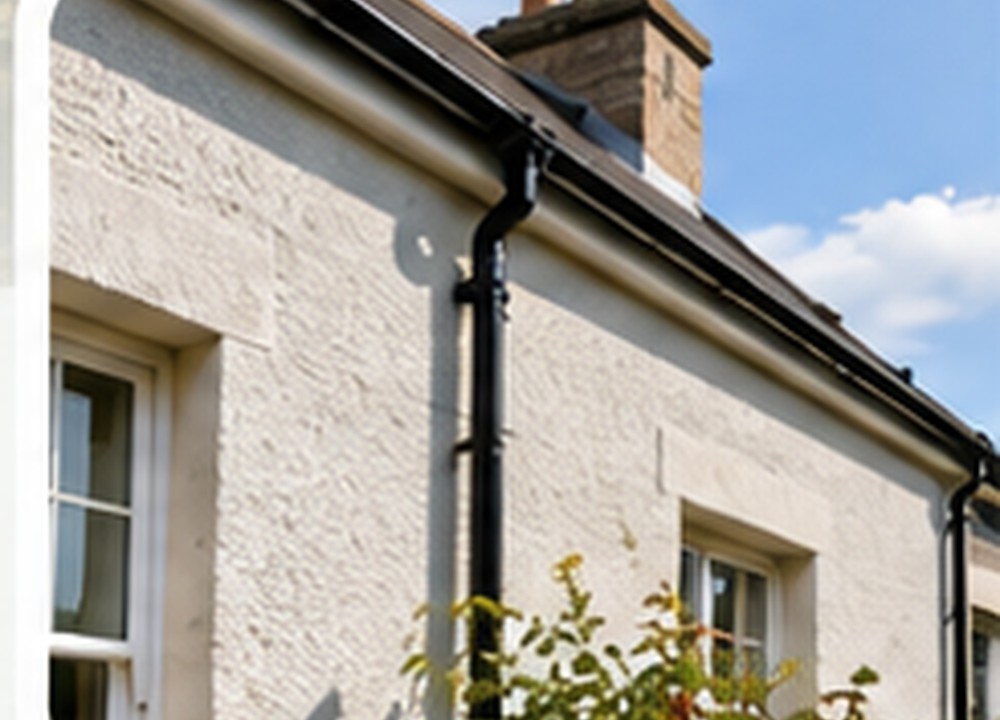
External rendering is not simply a cosmetic coating. A complete rendering project can involve preparation, removal of failed material, repairs to the underlying wall, reinforcement, beads, base coats and the final decorative finish.
If you are already planning replacement of one or more complete elevations, see our roughcasting and rendering quotation service.
What is external wall rendering?
Render is a broad term for an external coating or wall-finish system applied to masonry or another suitable background. Depending on the system, the finished surface can be smooth, lightly textured or more heavily textured.
The visible finish is only the final part of the build-up. What sits underneath it — and how that surface is prepared — can be just as important to the finished job.
What are the main benefits of rendering?
A refreshed exterior appearance
Rendering can give tired or mismatched walls a more consistent finish and can significantly change the appearance of a property.
Colour, texture and detailing can all influence the final result, so it is worth agreeing the intended finish before work begins.
A new protective external finish
A correctly specified exterior system can provide a renewed outer finish to the building. However, render should not be treated as a shortcut for unresolved moisture, structural or substrate problems.
If the wall beneath is cracked, loose, damp or otherwise defective, the cause should be understood before simply covering it.
A more uniform finish after previous repairs
Properties that have accumulated patches, alterations or areas of inconsistent finish may benefit visually from treating a complete elevation rather than adding another isolated repair.
What rendering options might homeowners come across?
There are many proprietary systems and finishes on the market. The terminology can vary between contractors and manufacturers, so homeowners should ask exactly what product and build-up is being proposed.
Traditional mineral or lime-based finishes
Traditional buildings may use mineral or lime-based materials, particularly where breathability and compatibility with older construction are important considerations.
These materials should be specified with the actual building fabric in mind rather than chosen purely for appearance.
Cement-based render
Cement-based renders have been widely used on residential buildings and can be finished in different ways. Their suitability depends on the substrate, existing construction and the proposed system.
Modern thin-coat systems
Modern proprietary render systems can include polymer-modified, silicone or other thin-coat finishes. These are often supplied as part of a complete manufacturer system rather than as a single decorative top layer.
If one is proposed, ask which manufacturer and exact system is being specified, including the required base coats, reinforcement and finish.
Textured finishes
Some homeowners prefer a more textured external appearance. Roughcast and harled finishes sit within this broader conversation and are especially familiar across Scotland.
Read our roughcasting vs rendering guide for a closer look at the terminology and differences.
Preparation can matter more than the final finish
Before a new render system is applied, the existing wall condition needs to be understood. A survey may need to consider:
- Whether the existing finish is securely bonded.
- Cracks and previous repairs.
- Hollow or loose areas.
- Damaged masonry, blockwork or other substrate defects.
- Moisture-related problems.
- Openings, sills, corners and other details.
- Access and scaffolding requirements.
Does the existing render need to be stripped?
Not necessarily. Some projects may require extensive removal, while others may involve repair and preparation of a sound existing background.
The contractor should explain why they recommend stripping, retaining or preparing the existing finish and how that approach fits the proposed new system.
Mesh, beads and base coats
Depending on the system, a rendering specification may include reinforcing mesh, corner or stop beads, base coats and primers before the final finish is applied.
These details should not disappear behind a vague quotation such as “render whole house”. Ask for the proposed build-up to be described clearly.
What about colour?
Many modern systems are available in a wide range of colours, while traditional finishes may be treated differently.
Consider how the proposed colour works with the roof, windows, doors, neighbouring properties and the wider character of the building.
If the property is listed or within a conservation area, changes to external appearance may also require additional checks before the specification is agreed.
How does Scottish weather affect the decision?
Exposure varies considerably from one property to another. Coastal locations, exposed elevations, prevailing weather and local site conditions can all be relevant when a specialist recommends a system.
The correct product should be chosen for the actual property and installed in accordance with the relevant system requirements rather than selected solely because of colour or texture.
Will rendering solve damp?
Rendering should not automatically be treated as a cure for damp. Moisture can arise from different causes, including defects elsewhere in the building, drainage, ventilation or problems with the wall itself.
If damp or persistent moisture is present, the underlying cause should be investigated before committing to a new external finish.
How much does external rendering cost?
Cost depends on much more than the final finish. Wall area, scaffolding, access, removal of existing material, substrate repairs and the chosen system can all materially affect the quotation.
Read our 2026 Scotland roughcasting and rendering cost guide for indicative budgeting information.
What should a rendering quotation include?
A useful quotation should clearly state the scope rather than simply naming a price per house.
Look for details such as:
- Which elevations are included.
- Scaffolding and access.
- Removal or preparation of the existing finish.
- Repairs to the underlying substrate.
- Base coat and reinforcement where applicable.
- Beads and detailing.
- The exact render system and final finish.
- Colour.
- Protection of windows, doors and surrounding areas.
- Waste removal.
- Programme and payment stages.
- Guarantee or warranty information.
Use our roof and roughcasting quotation checklist when comparing written proposals.
Patch repair or full elevation?
A small isolated defect may be repairable without replacing an entire elevation. However, widespread cracking, repeated patch failure or extensively loose material can make a complete wall treatment worth discussing.
Scottish Exterior Quotes currently focuses on one or more complete wall elevations and whole-property roughcasting or rendering replacement rather than small isolated patch repairs.
Rendering projects in Edinburgh, the Lothians and Fife
We currently review qualifying homeowner roughcasting and rendering enquiries across Edinburgh, the Lothians and Fife, subject to participating specialist coverage and availability.
For local project information, see roughcasting and rendering in Edinburgh and the Lothians or roughcasting and rendering in Fife.